Amazon FBA (Fulfillment by Amazon) remains one of the most reliable paths to passive ecommerce income in 2025 but the game has shifted. Fee structures have tightened, competition in generic niches has intensified, and platform policies have become more stringent. The sellers winning right now are those who understand exactly how the system works and build their stores on that foundation, not on shortcuts that worked three years ago.
This guide covers everything a new seller needs to understand before investing capital: how FBA actually works, what it costs, how to choose a product that has real margin left, and the five mistakes that sink most new stores before they ever reach profitability. If you're considering Amazon FBA in 2025, this is the starting point.
What Is Amazon FBA (and Why It Still Works in 2025)
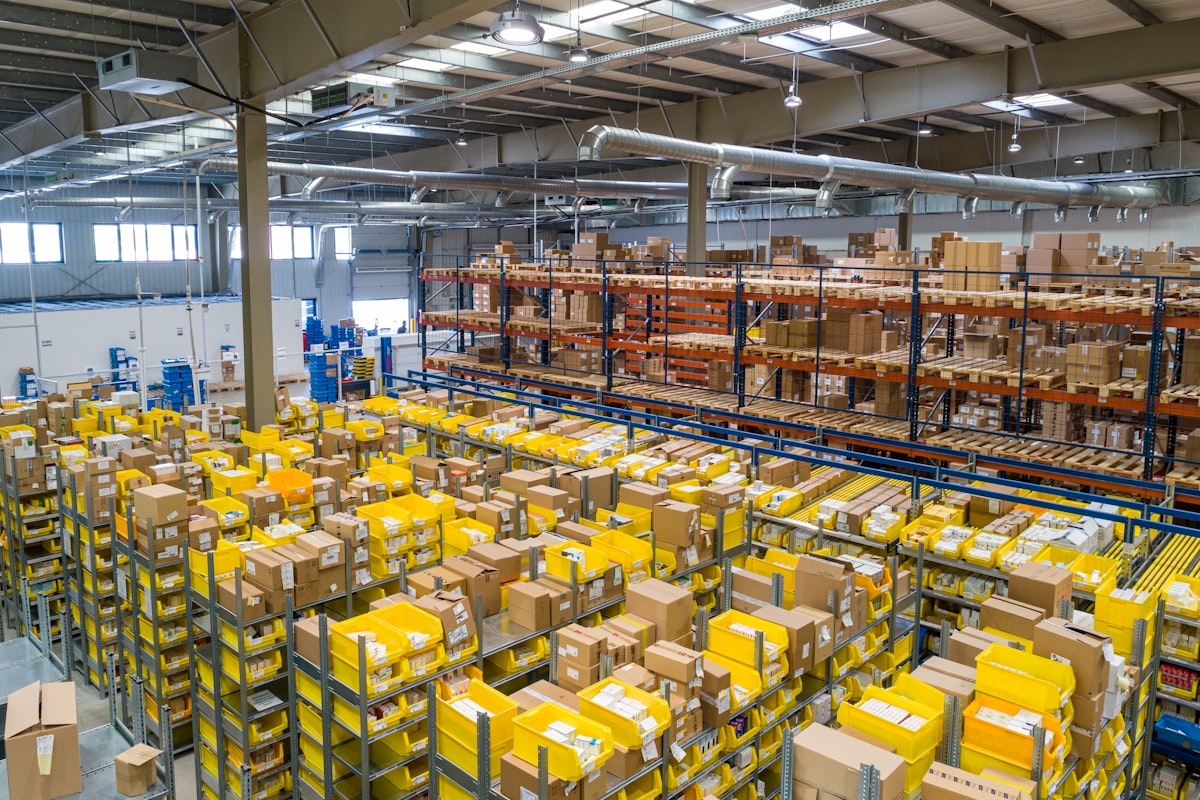
Amazon FBA is a fulfilment service where you ship your inventory to Amazon's warehouse network and Amazon handles storage, picking, packing, shipping, and customer service on your behalf. You sell, Amazon ships. In exchange, Amazon charges fees but also gives your products Prime eligibility, which significantly increases conversion rate compared to merchant-fulfilled listings.
The reason FBA still works in 2025 is structural: 67% of Amazon shoppers filter by Prime, and Prime-eligible products convert at two to three times the rate of non-Prime alternatives. For sellers who get the unit economics right, FBA creates a compounding system better conversion rate means higher organic rank, which drives more sales, which funds more inventory, which keeps the flywheel turning.
The sellers struggling are those who entered generic, high-volume categories (kitchen gadgets, phone accessories, supplements) with undifferentiated products and thin margins. Those markets absorb capital fast. The sellers scaling in 2025 are in defensible niches with clear buyer personas, product quality that generates 4.5+ star ratings, and enough margin to fund PPC while still being profitable.
The Real Cost of FBA in 2025: A Complete Fee Breakdown
One of the most common mistakes new sellers make is underestimating total FBA costs. Amazon charges multiple overlapping fees, and understanding each one is essential before you commit to a product.
- Referral fee: 8–15% of the selling price, depending on category. Most categories are 15%. This is non-negotiable and applies to every sale.
- FBA fulfilment fee: charged per unit shipped, based on size and weight. Standard-size items typically range from $3.22 to $6.10 per unit. Oversized items cost significantly more.
- Storage fees: $0.87 per cubic foot per month (standard size) for January–September; $2.40 per cubic foot for October–December (peak season surcharge). Long-term storage fees kick in for inventory held over 365 days.
- Inbound placement fee (new in 2024): Amazon now charges to place inventory across its fulfilment network. Sending to a single location incurs a fee per unit; spreading inventory across multiple locations reduces or eliminates this fee.
- Returns processing fee: applied when customers return FBA items in certain categories. New in 2024, this adds cost to products with high return rates.
A realistic total-cost model for a standard-size product priced at $29.99 looks like this: referral fee ($4.50) + FBA fulfilment fee ($4.20) + storage ($0.30/unit averaged) + inbound placement ($0.27) = roughly $9.27 in Amazon fees per unit, before your product cost, shipping to Amazon, or advertising. If your landed cost per unit is $7, your gross margin is $29.99 − $7 − $9.27 = $13.72, which is 45.8%. That's healthy. If your landed cost is $12, your margin drops to 29% workable, but PPC can easily wipe it out if campaigns aren't optimised.
Finding the Right Product to Sell
Product selection is the highest-leverage decision in FBA. Getting it wrong means pouring capital into inventory that either doesn't sell, sells at a loss, or gets crushed by competitors the moment you start gaining traction. Getting it right creates a self-funding system that scales with minimal ongoing input.
The criteria that define a viable FBA product in 2025: monthly search volume of 5,000–30,000 (large enough to support sales volume, small enough to avoid the largest incumbents), average selling price of $25–$65 (strong enough margin to absorb fees and PPC), fewer than three or four dominant listings with more than 1,000 reviews (otherwise the cost of review accumulation before you rank is prohibitive), and a product that can be genuinely improved in design, quality, packaging, or positioning over what's already on the market.
Tools like Helium 10, Jungle Scout, and AMZScout can help you model demand and competition. But the actual validation happens by reading the one, two, and three-star reviews of the top competitors: that's where buyers tell you exactly what's wrong with the current options. Your product brief comes from those reviews.
- Avoid seasonal products for your first listing demand fluctuation makes cash flow management much harder.
- Avoid products that are easily breakable, require batteries, or are classified as hazardous materials (HAZMAT). These add complexity and cost.
- Private label (your own brand) is preferable to wholesale arbitrage for long-term defensibility and Brand Registry access.
- Target a minimum 35% gross margin after all FBA fees but before PPC. You need that buffer to advertise profitably.
Setting Up Your First FBA Shipment
Once you've sourced your product (typically from a verified supplier in China via Alibaba, Global Sources, or a sourcing agent), the process of getting inventory into Amazon's fulfilment network follows a specific workflow. Each step has quality gates you cannot skip.
- Create your listing in Seller Central before your inventory ships. You need the ASIN to generate shipment labels.
- Have your supplier conduct a pre-shipment inspection. Third-party inspection services like QIMA or AsiaInspection cost $250–$350 and catch defects before they become Amazon returns.
- Create an FBA shipment plan in Seller Central. Amazon will direct you to one or more fulfilment centres depending on the product category and the inbound placement option you choose.
- Ship to Amazon's designated warehouse. Most sellers use sea freight from China (4–6 weeks) for initial orders; air freight (1–2 weeks) costs 4–5x more per kilogram but is useful for fast-moving SKUs.
- Monitor your shipment in Seller Central and reconcile received inventory against what was sent. Amazon occasionally loses units file a claim immediately if counts don't match.
Launching Your Listing: SEO, PPC, and Reviews
A well-optimised listing is the infrastructure that everything else runs on. Amazon's A9/A10 algorithm rewards listings that convert well so if your listing converts poorly, your organic rank will fall regardless of how much PPC you run. Invest in professional product photography (7–8 images minimum, including lifestyle shots), a keyword-optimised title (front-load the primary keyword), and benefit-led bullet points that address the buyer's specific problem.
For PPC at launch, run automatic campaigns at a moderate daily budget ($25–$50) for the first two weeks to harvest search term data. Then create manual campaigns targeting the highest-converting terms from that harvest data, and add non-converting terms as negative keywords to the auto campaigns. This structure auto campaign feeding data to manual campaigns is the baseline that every competent Amazon PPC operation runs.
Reviews are the trust signal that makes or breaks conversion on new listings. The legitimate paths to early reviews: Amazon's Vine programme (enroll up to 30 units for Vine Voices to review), follow-up email sequences via Seller Central's buyer-seller messaging, and product inserts that ask for honest feedback. Never buy reviews or use review swap groups Amazon's detection systems are sophisticated, and the penalty is account suspension.
The 5 Mistakes Beginners Make (and How to Avoid Them)
- Choosing products based on gut feel rather than data. Every product decision should be validated by real search volume, competition analysis, and margin modelling before a dollar of inventory is ordered.
- Underestimating the capital required. Most sellers need $5,000–$15,000 for a first launch: product sampling ($200–$500), first inventory order ($2,000–$8,000), inspection ($300), shipping ($400–$1,500), and launch advertising ($1,000–$2,000). Running out of capital mid-launch kills momentum permanently.
- Ignoring account health. Amazon suspends accounts for policy violations, high defect rates, and shipping performance issues. Check your Account Health dashboard weekly and respond to any notifications within 24 hours.
- Competing on price in margin-thin categories. If the only way to win customers is to be the cheapest, you're in the wrong product. Differentiation better features, better packaging, better photography is what creates durable margin.
- Not reinvesting profits into inventory. The biggest growth lever in FBA is inventory turnover. Sellers who pull profit out early consistently hit stock-out events that cost organic rank and momentum. Reinvest for the first 12 months.
Is Amazon FBA Still Worth It in 2025?
Yes with the right product and the right capital structure, Amazon FBA remains one of the highest-ROI passive income vehicles available to investors. The fee increases of 2023 and 2024 have raised the bar for product selection, but they've also cleared out undercapitalised sellers who were subsidising sales with no regard for margin. The competitive landscape in defensible niches is actually more navigable than it was at peak 2021 FBA saturation.
The sellers who succeed in 2025 are those who treat Amazon FBA as an operational business, not a passive side project. They model their unit economics before buying inventory, invest in listing quality, manage PPC with discipline, and maintain account health religiously. Done correctly, a single mature FBA product at $40,000/month in revenue with 30% net margin generates $12,000/month in profit from a standing start.
Want a profitable ecommerce store without the daily grind? Ecom By Experts builds and manages fully automated stores for investors and capital holders.